Everest Climber Uses LaMotte Products to Analyze Water Quality Amidst Historic Completion of Seven Summits
Articles & Insights
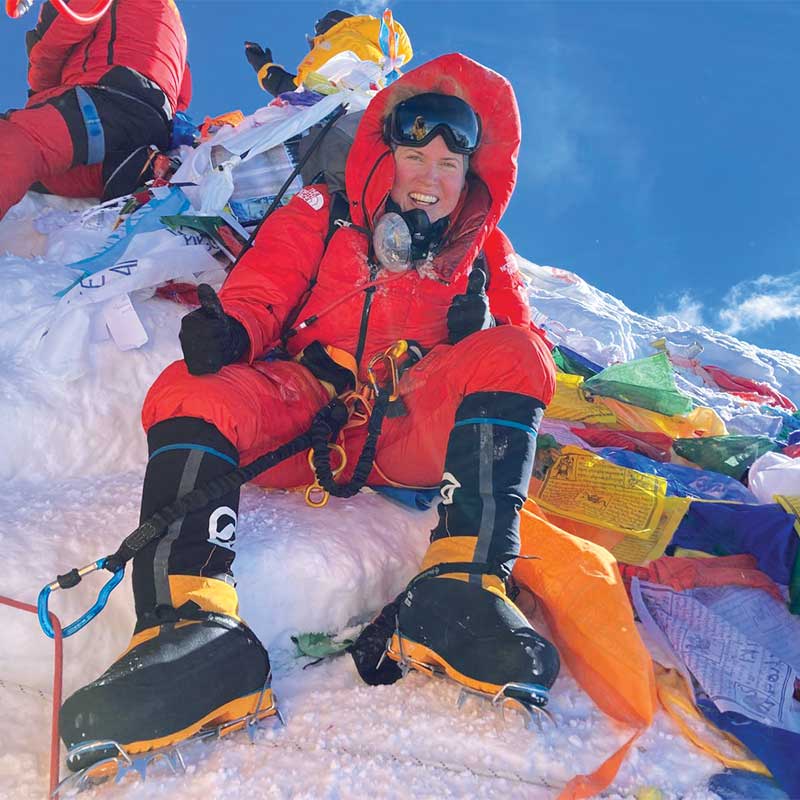
2024 welcomed a new female climber to the elite Seven Summits club when Megan Rath of Philadelphia completed her multi-year journey to climb the tallest mountain on every continent. As documented in this story, Rath’s expedition to Mt. Everest was sponsored by LaMotte, a leading water analysis company based in Maryland and Delaware.
During her climbs on Mt. Everest in Nepal and Carstensz Pyramid in Indonesia, Rath used the WaterLink® Spin Touch®, LaMotte’s flagship water analyzer, to analyze water samples at numerous elevations and cardinal directions. Rath’s successful use of the Spin Touch®, even in harsh conditions driven by weather and altitude, highlights the product’s ease-of-use and analytical insights for applications around the world.
Water Quality Analysis on Mount Everest
Climbing Mt. Everest is a multi-day endeavor which involves planned stopping points at various elevations to provide rest and enable altitude acclimatization. During each day, snow is collected and melted to provide water for drinking and cooking. Rath and her climbing partners gathered snow samples on both the north and south sides of Everest at multiple camps. Several samples were tested while still on the mountain and others were returned to the LaMotte headquarters in USA for analysis.
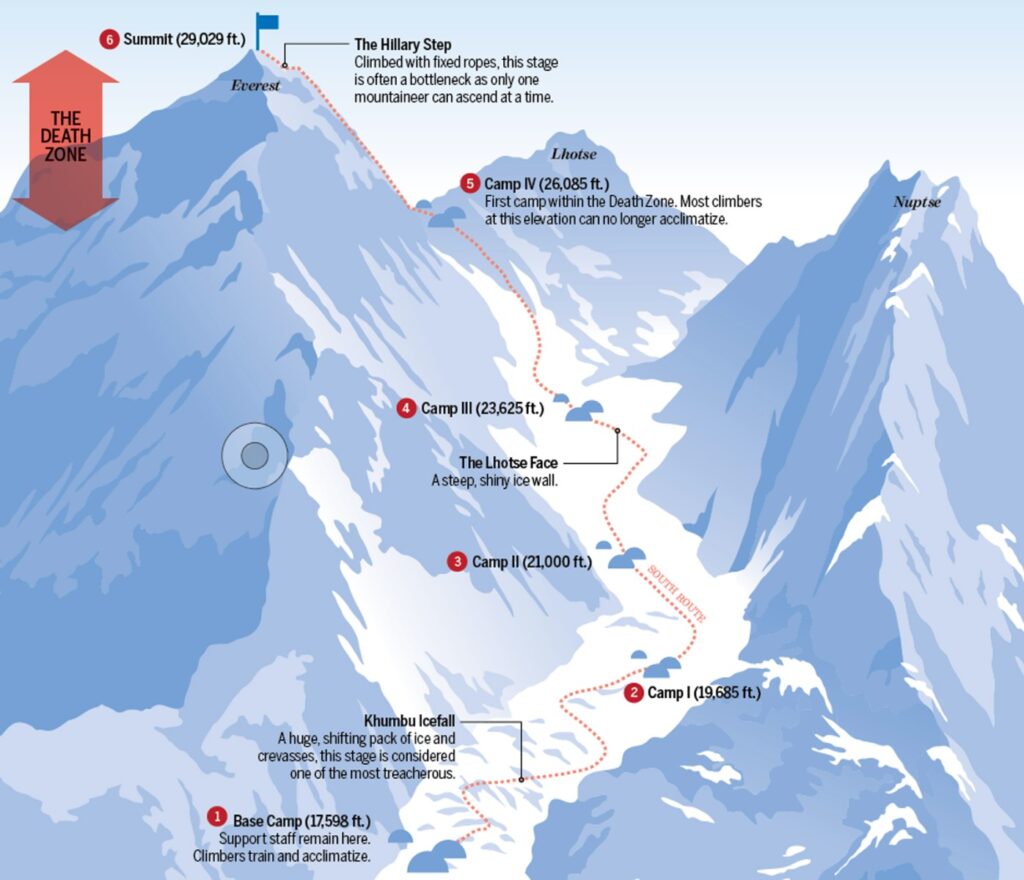
In addition to Rath’s own testing on the mountainside, LaMotte researchers in the states used the innovative WaterLink® Spin Touch® to complete tests on the following samples from Mt. Everest:
| Everest Camp | Elevation | pH | Alkalinity | Hardness |
|---|---|---|---|---|
| South – Base Camp | 17,220 ft | 6.3 | 31 | 29 |
| South – Camp 1 | 19,910 ft | 5.3 | 26 | 31 |
| South – Camp 2 | 21,037 ft | 5.7 | 29 | 31 |
| North – Base Camp | 17,060 ft | 7.3 | 38 | 34 |
| North – Advanced Base Camp | 21,161 ft | 7.3 | 38 | 34 |
| North – Camp 2 | 25,427 ft | 7.5 | 48 | 29 |
| North – Camp 3 | 27,231 ft | 6.2 | 32 | 32 |
NOTE: Test factors shown above are averages of multiple samples taken at each site.
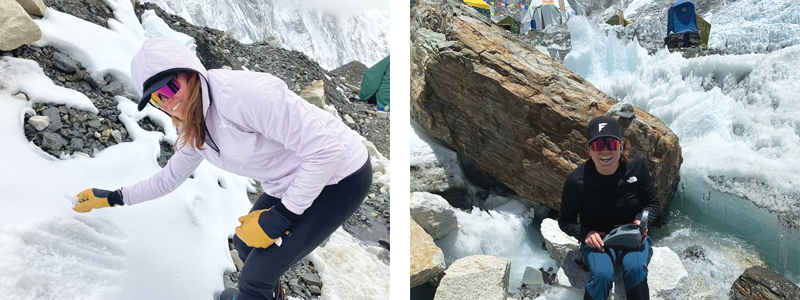
| Using the WaterLink® Spin Touch® to test water quality at Everest Base Camp |
Approximately 15 samples were collected on Mt. Everest, and LaMotte researchers were able to provide the following general insights:
- The north side of Mt. Everest had higher pH, alkalinity and hardness than the south side. While these differences were not large, the values were distinct. Further research would be required to explain why, but one theory is that the weather impacts the sides differently, and the south side is less impacted from wind/dust blowing off the Tibetan plain which is north of Everest.
- pH values suggest the water was overall very pure with slight alkalinity, and they trended more acidic at higher elevations. This could be from wind blowing from the northern region which might increase levels of calcium carbonate on Everest, especially on the north side.
- Alkalinity tended to follow pH trends, so higher pH levels also showed higher alkalinity.
- There were essentially zero contaminants or metal in the Everest water samples. Testing found no significant amounts for iron, copper, nitrate or nitrite.
High Quality Drinking Water Results Found on Everest and Carstensz Pyramid
Several months after summiting Everest, Rath completed the Seven Summits challenge by climbing Carstensz Pyramid in Indonesia. Distinctly different from Everest, Carstensz did not have snowfall at the time of her climb, so Rath gathered water samples directly from an alpine lake that is used for drinking water.
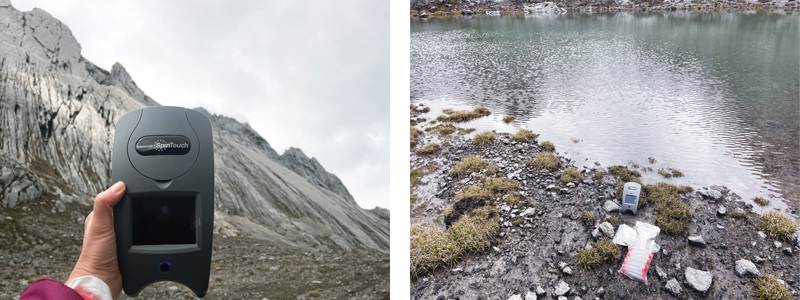
| Using the WaterLink® Spin Touch® to test water quality at Carstensz Pyramid |
Below is a comparison of average readings from Everest and Carstensz:
| Average readings | pH | Total Alkalinity | T Hard | T Iron | Ferrous | Ferric | Copper | Nitrite | Nitrate |
|---|---|---|---|---|---|---|---|---|---|
| Everest South Side | 5.74 | 29 | 30 | 0.06 | 0.02 | 0.02 | 0.0 | 0.01 | 0 |
| Everest North Side | 7.17 | 41 | 32 | 0.06 | 0.02 | 0.02 | 0.0 | 0.01 | 0 |
| Carstensz Pyramid | 7.66 | 63 | 28 | 0.03 | 0.00 | 0.03 | 0.0 | 0.00 | 0 |
Samples from the lake on Carstensz Pyramid showed slightly increased alkalinity, meaning it had a higher buffering capacity to neutralize acids in the water. This increase in alkalinity and higher pH makes sense being that this is a freshwater lake, and it suggests a more stable and suitable environment for fish and various aquatic invertebrates.
Otherwise, results from both mountains were very similar. The low levels of iron, copper, nitrites and nitrates suggest they are both very clean and without impact from pollution. Safe drinking water shows alkalinity ranging from 30-400 ppm, and these results show quality levels at the highest end of the scale.1
Conclusions
While it is essential to clearly point out that these are not highly scientific results based on rigorous samples and testing, they do provide valuable insights that could lead to future research. Additionally, this basic research demonstrates that water is in its simplest and cleanest form at the highest elevations and before significant influence from pollution or other contaminants.
This clean water is especially important for the Himalaya mountain range, home to Mt. Everest, because it provides “half of the world’s population with freshwater,” with ten major rivers originating in the Himalaya and supplying “freshwater to 1.3 billion people living in [their] watershed.”2
1 https://www.idph.state.il.us/envhealth/pdf/Drinkingwater.pdf
2 https://education.nationalgeographic.org/resource/living-mount-everest-watershed/